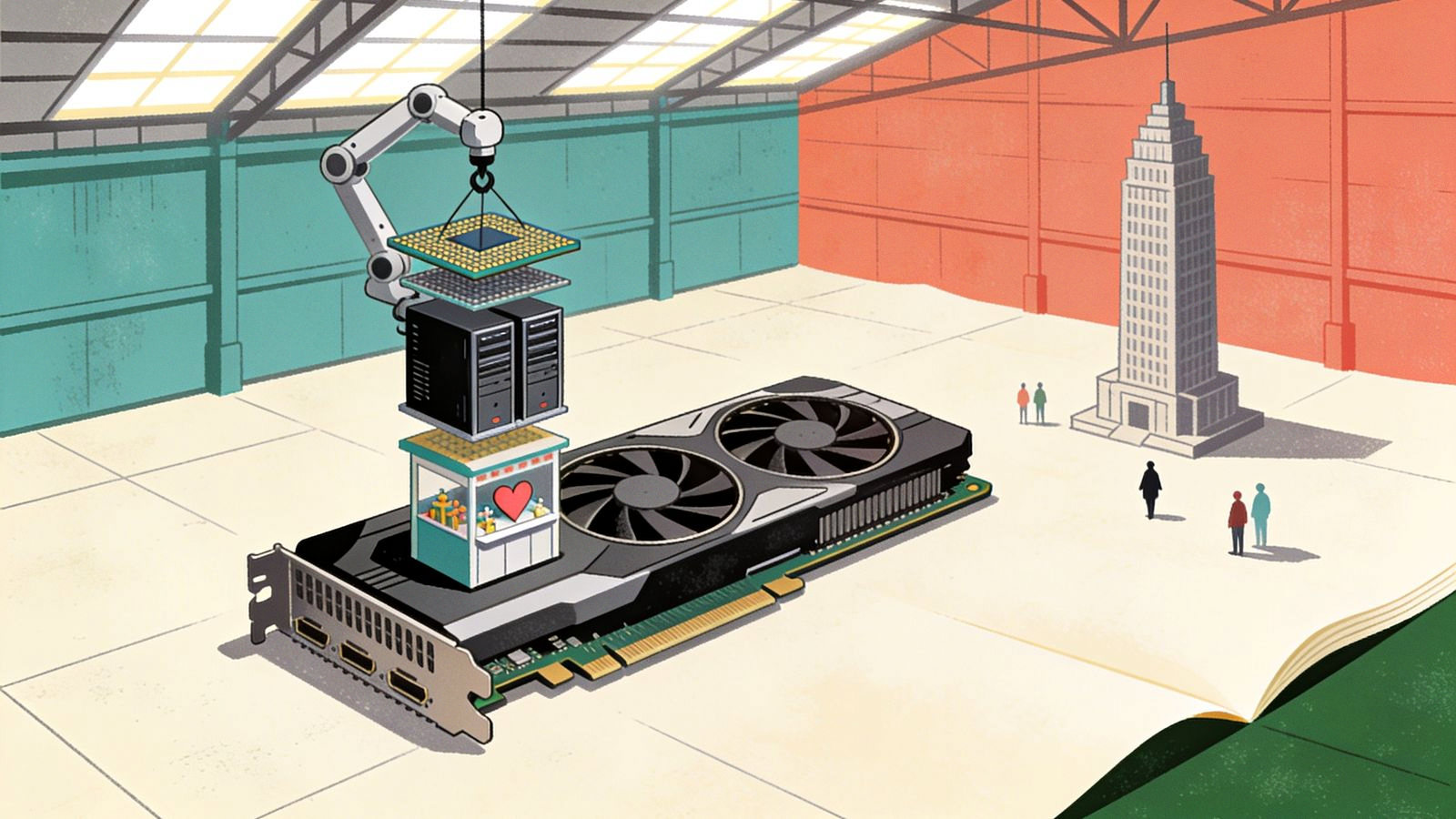
Nvidia confirmed on September 3 that it has agreed to acquire Hugging Face, the open-source AI model-hosting platform, for $12,930,300,0003. The deal is Nvidia's second-largest acquisition, following its $20 billion purchase of Groq assets at the end of last year2.
Hugging Face hosts more than three million models, one million applications used by over 18 million developers, and half a million datasets1. Founded in 2016, the platform is frequently described as the "GitHub" for AI, offering a browsable library of open-source machine learning models and community collaboration tools4. The company has raised over $395 million in funding to date, with its last round of $235 million closing in 2023.
In a blog post, Nvidia CEO Jensen Huang said Hugging Face will "remain an open platform for the entire AI ecosystem". "Developers will choose the models they want, the frameworks they want, the clouds and inference service providers they want and the computing platforms they want. Nvidia compute will not be required to build on or deploy through Hugging Face," Huang said. Nvidia and Hugging Face plan to scale the platform, strengthen its infrastructure, and expand access to AI for developers and institutions worldwide.
Huang also cited Nvidia's existing footprint on the platform, noting the chipmaker has released more than 500 models and 250 open datasets on Hugging Face. He argued the company builds open models to drive developer adoption globally.
The acquisition moves Nvidia further up the AI stack beyond its dominant position in hardware for AI development and inference. TechCrunch noted that for a hardware-dominant company like Nvidia, an open ecosystem under its control could create a platform suited for its chips, and that Nvidia could sell unused compute capacity to enterprise customers packaged with Hugging Face's offering.
ANALYSIS The transaction gives Nvidia direct ownership of the distribution layer where millions of developers discover, share, and deploy AI models, complementing its existing grip on the compute layer. Keeping the platform vendor-neutral, as Huang pledged, preserves the network effects that make Hugging Face valuable, while Nvidia gains a channel to surface its own models, datasets, and optimized tooling to the platform's 18-million-developer base.