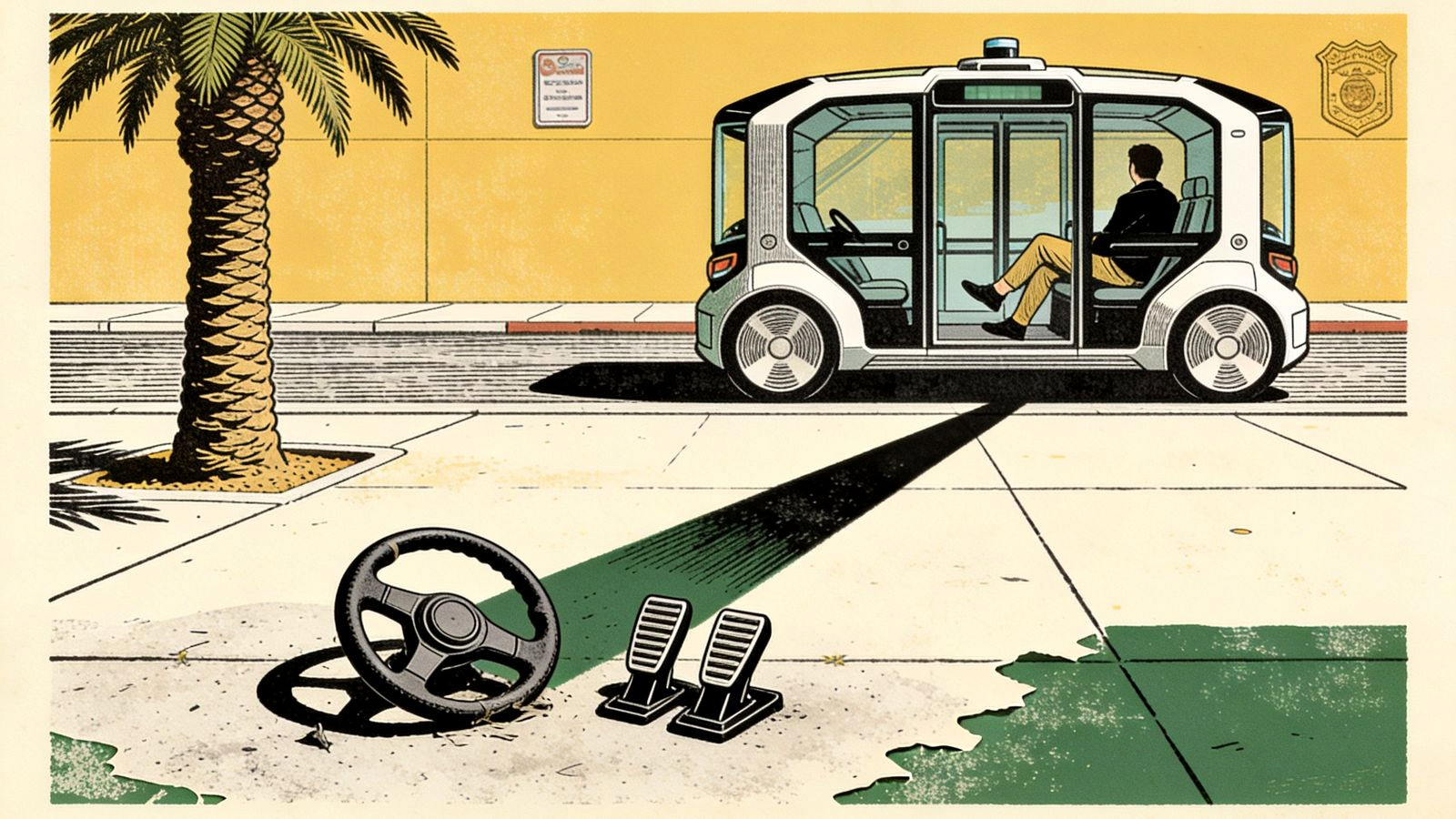
Amazon's Zoox began charging fares for robotaxi rides in Las Vegas on August 10, marking the company's first commercial revenue since Amazon acquired Zoox for approximately $1.2 billion in 20202. The paid service follows nearly a year of free rides in the city and arrives weeks after a key federal regulatory clearance.
On July 30, the National Highway Traffic Safety Administration granted Zoox a two-year commercial exemption for a purpose-built robotaxi with no steering wheel and no pedals. The exemption allows commercial deployment of up to 2,500 Zoox vehicles per year for two years, with added oversight.
Zoox fares use a base charge plus time and distance, with pricing positioned near the comfort tier on Uber or Lyft, according to CNBC reporting cited by Startup Fortune. Las Vegas is currently the only market where Zoox is collecting fares; San Francisco remains free for selected riders, and Austin and Miami are early-stage markets.
Days after the Las Vegas fare launch, Reuters reported on September 1 that Zoox would begin testing in Houston and San Diego3,5. Zoox will first deploy retrofitted test vehicles for manual mapping in both cities before its purpose-built robotaxis arrive. The company has not disclosed when riders in Houston or San Diego will receive driverless rides, or when paid service might follow.
Before paid service began, Zoox had carried nearly one million riders and driven more than three million public-road miles across Las Vegas, San Francisco, Austin, and Miami. On June 24, Zoox showed an updated production-intent version of its robotaxi design, originally introduced in 2020, featuring added seat padding, larger cupholders, a clearer touchscreen, and door audio.
The expansion puts Zoox on a collision course with Alphabet's Waymo. On the same day Zoox announced its San Diego testing plan, Waymo began opening public rides in San Diego, Denver, and Tampa. Waymo's fully autonomous ride service has reached 14 cities, and TechCrunch reported that its fleet has grown to more than 4,000 vehicles.
ANALYSIS Zoox's move from free demonstration rides to paid fares in Las Vegas converts a long-running R&D project into a revenue-generating operation for the first time, a threshold Waymo crossed earlier. The NHTSA exemption for a vehicle without manual controls removes a structural barrier that had limited Zoox to retrofitted cars in most markets. Houston and San Diego testing, however, remains pre-commercial: mapping with conventional vehicles precedes any autonomous service, and the gap between mapping and paid rides in Las Vegas took roughly a year.